
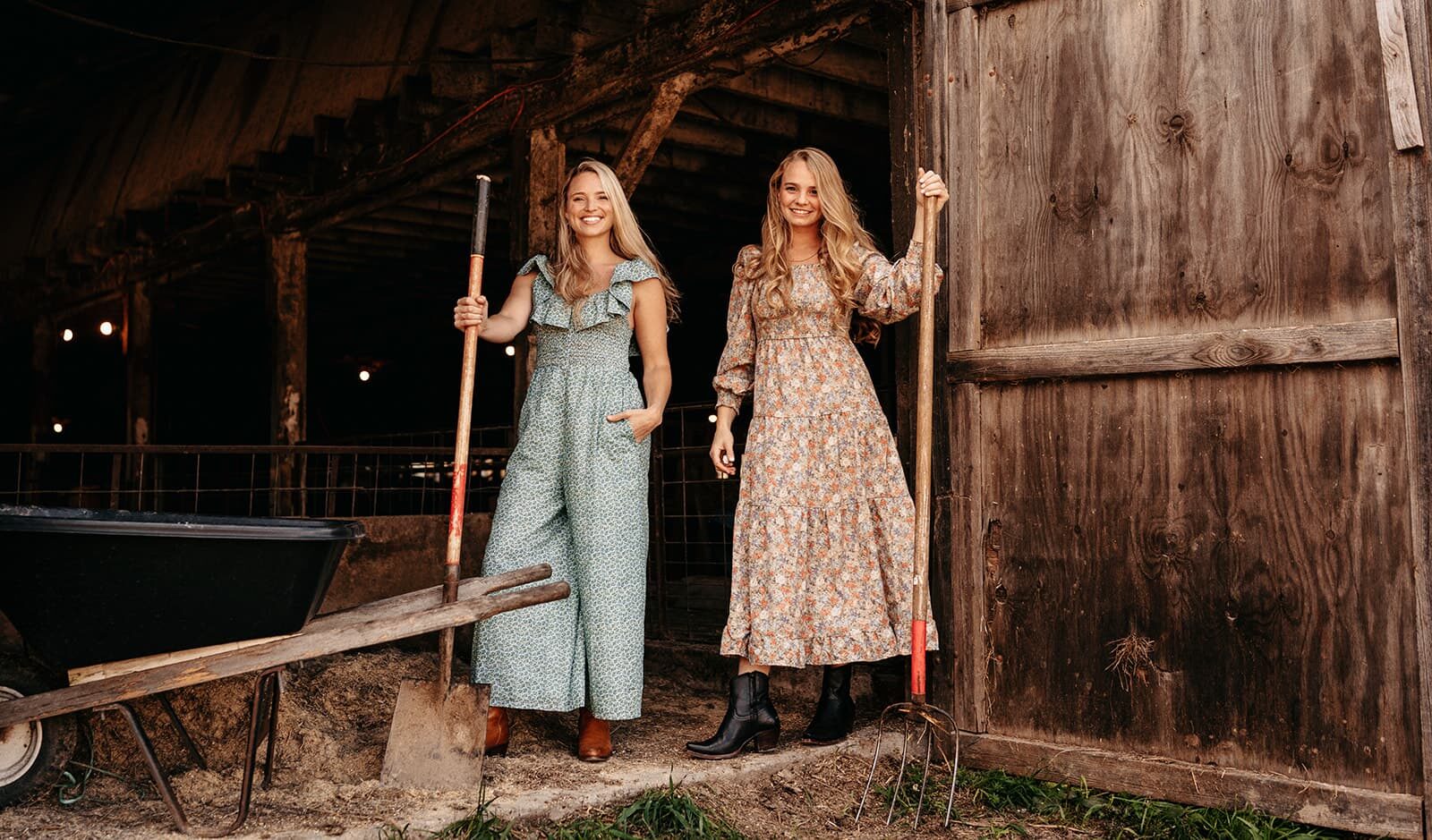
Painterland Sisters: Where are they now
September 29, 2025Homestead Farms: Building a Business Worth Passing Down
A BUSINESS CONSULTING CASE STUDY
Luke started Homestead Farms in 2002 after purchasing 77 acres of bare land with no electricity, water, or a driveway. Like many independent farmers, he built the business gradually. Vegetables led to a CSA and farmers markets, and he then expanded into row crops.
For years, he could rely on off-farm income to absorb any risk in the business. As the farm grew, however, so did the stakes.
The turning point came when Luke purchased a 221-acre poultry farm, a $2.4 million investment that pushed the business into unknown territory. Homestead Farms had become a much larger operation, and one that was too complex not to have a clear understanding of the numbers behind it.
“That was when the fear and the uncertainty of cash flow and P&Ls really became overwhelming.”
That uncertainty is what led Luke to Good Roots.
Replacing Guesswork With Financial Systems
Luke’s operation had reached a point where he couldn’t just wing it anymore. Complexity requires structure, and that’s where our team started.
One of the first tools introduced was a 13-week rolling cash flow: a week-by-week forecast that mapped incoming cash, outgoing expenses, and projected balances over time. Like most farmers, Luke got into the business to work the land, not to stare at spreadsheets. To keep it practical, we sat down together and built a simple system tailored to his specific operations. This gave him a level of foresight he hadn't had before, allowing him to see exactly what was going to happen to his money week by week, even when cash was tight.
Instead of reacting to issues under pressure, Luke could see cash problems weeks in advance, and address them with a clear head.
The Results
From there, the work expanded into building the systems most farms never fully develop: a structured chart of accounts, consistent enterprise budgeting, debt restructuring, and regular financial reviews that connected day-to-day decisions to actual performance.
Hard Decisions Require Honest Conversations
Putting these financial tools in place was only the first step. The numbers gave us clarity, but they only worked because there was enough trust between us to have completely honest conversations about what they meant.
Luke describes that relationship simply:
“It’s almost like therapy. When you’re feeling overwhelmed, you need somebody professional to talk to. There was no judgment whatsoever.”
That trust made it possible to address decisions that many farms avoid for years, especially when those decisions are tied to identity as much as finances.
One of the biggest was Luke's vegetable operation. It was the first enterprise he built and a major part of Homestead Farms since the beginning. As we worked through the farm's finances and reviewed each enterprise, it became clear that the vegetable operation was struggling to justify the time, labor, and resources it required. While other parts of the business were generating profits, the vegetable operation was not.
The challenge wasn't just financial. Cutting the vegetables operation meant putting colleagues out of work. Rather than making a sudden change, we worked through a gradual wind-down process. We evaluated the role each enterprise played in the business, identified where resources could be better allocated, and developed a plan that allowed the family time to adjust. As part of that transition, we also helped management find employment opportunities off the farm.
The Results
The vegetable operation was successfully wound down, allowing Homestead Farms to concentrate its resources on row crops and poultry, where they could generate stronger returns.
At the same time, the employees transitioned into fulfilling off-farm careers that some still work in today. By combining enterprise budgeting with honest conversations, Luke was able to make the right decision for the business without losing sight of the people it affected.
“It’s almost like therapy. When you’re feeling overwhelmed, you need somebody professional to talk to. There was no judgment whatsoever.”
-Luke Howard, Owner, Homestead Farms
Turning Succession Anxiety Into a Clear Plan
Those same honest conversations became even more important when Luke's son, Joseph, expressed interest in joining the business. Like many farm parents, Luke wanted to know that the farm could provide Joseph with a future worth taking over.
Our approach to succession planning starts with the numbers. It is very difficult to hand off an organization if the next generation doesn't know how to run it, and it doesn't make sense to pass down a business that isn't financially healthy.
By the time Joseph expressed interest in taking on ownership, we were years into the process of building the farm's financial foundations. Our work on reporting, budgeting, cash flow planning, and regular business reviews had already created a much clearer picture of how the farm operated and where it was headed.
From there, we worked with the family to build a plan that supported both generations. Joseph became involved in reviewing financial reports, understanding settlement sheets, and using the farm's numbers to make management decisions. Together, we evaluated ownership options, modeled compensation, addressed debt obligations, and made sure the numbers worked not just for the farm, but for Joseph personally. We wanted to know that he could build a future in agriculture, pay down his student loans, and eventually support a family of his own.
The Results
When the time came, Luke was able to pass ownership of the poultry operation to his son knowing that the business could support him and that he had the skills to run it successfully.
Today, both generations continue to farm together while operating independently.
“Now Joseph owns a farm, I own a farm, and we farm together.”
-Luke Howard, Owner, Homestead Farms
Bringing Structure to Unpredictability
Like all farmers, Luke still faces uncertainty. You can’t control the weather, rising costs, or how the market will fluctuate on any given day. What changed is how he responds to it.
“One of the ways that I manage it is I live by my cash flow charts and my budget to actuals. As long as those are in line, then my anxiety level goes down and I wake up tomorrow and go again. I actually built my cash flow out now for nine months and have fallen in love with Excel. It’s muscle memory at this point.”
Today, Luke continues to use the financial tools and processes we built together. Instead of wondering where the business stands, he has a clear picture of his finances and the confidence to make hard decisions as challenges arise.
The Results
The same cash flow forecasts, budgeting processes, and financial reviews that once felt overwhelming are now part of how Luke runs his farm every day.
Problems still come up. The difference is that he sees them sooner, understands his options, and knows how to respond.
"Good Roots made me feel like I wasn't alone."
-Luke Howard, Owner, Homestead Farms
When Growing Farms Outgrow Their Systems
Every farm is unique, but Luke’s challenges are shared by operations everywhere. Many farms grow into complex businesses long before they develop the systems needed to support them. Good Roots exists to help bridge that gap, building clarity, supporting decision-making, and helping farm businesses create something sustainable enough to carry into the next generation.
Stay Connected
Want more stories and practical insights like this? Subscribe to the Good Roots newsletter for real-world advice, stories from farms like Homestead, and tools you can apply to your own operation.
"*" indicates required fields