
The Cash vs. Profit Myth
July 21, 2026The Cash vs. Profit Myth
July 21, 2026July 24, 2026
Multigenerational Craft Meets Modern Tech: 4 Takeaways from AAMP
By Jackson Baker, Client Relations Specialist
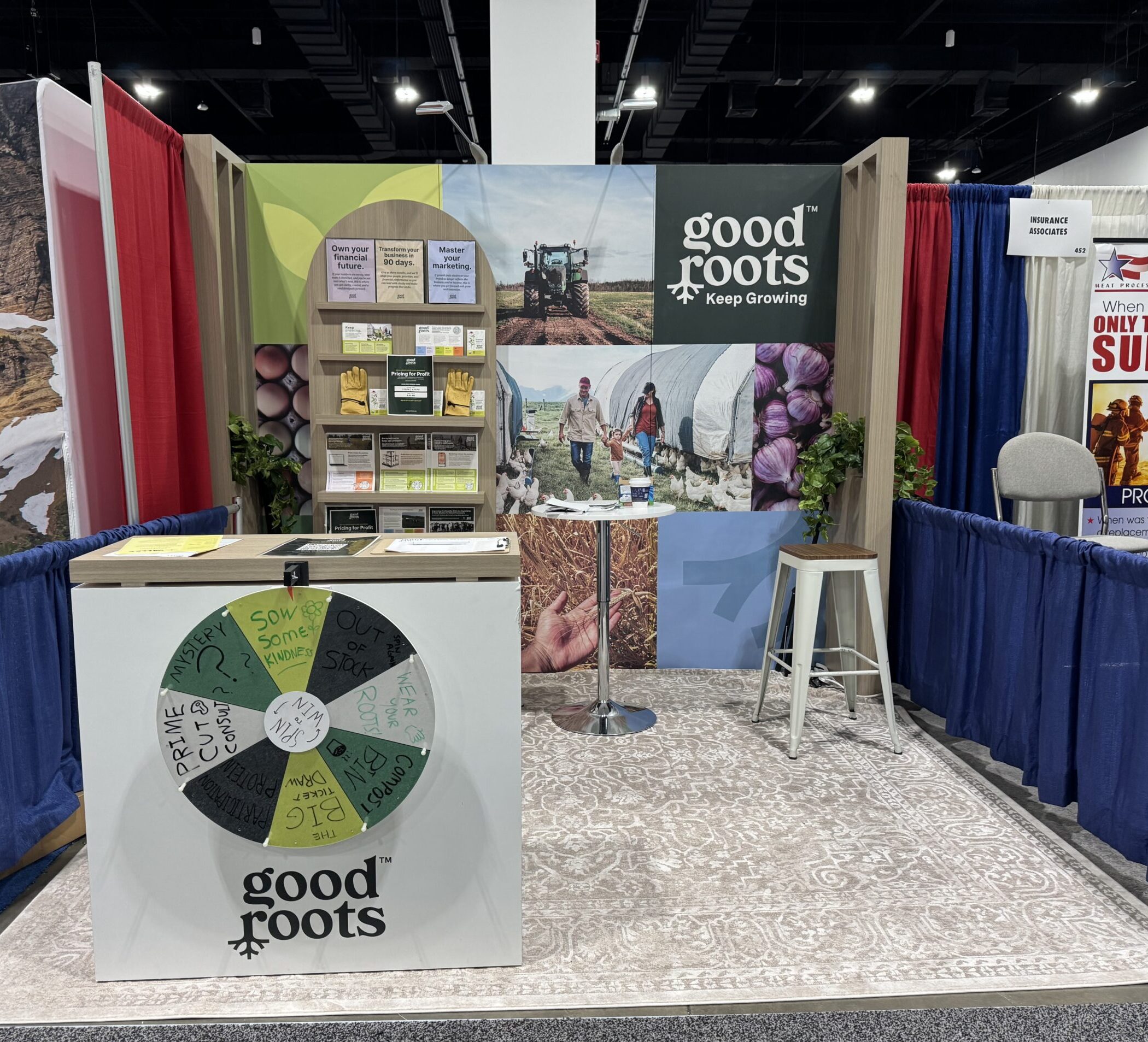
Earlier this month, our team at Good Roots traveled to Milwaukee, Wisconsin for the 87th American Convention of Meat Processors & Suppliers Exhibition. As our third time exhibiting and sponsoring this event, returning to the Baird Center felt like a true homecoming.
AAMP brings together independent meat processors, packers, and suppliers from across the country. While the tradeshow floor was packed with impressive equipment displays, the real value came from seeing how the independent meat sector is navigating shifting markets, economic pressures, and rapid technological shifts. Catching up with our current and past clients face-to-face—like Zimmerman Meats, Paradise Locker Meats, and Cypress Valley Meat Company—reminded us just how resilient and vital this community is.
The convention also gave us a macro view of where the market is headed. In the keynote presentation by Anne-Marie Roerink of 210 Analytics, data showed that meat department sales hit a record $113.9 billion, with consumer perceptions shifting meat from "villain" to "vital" as shoppers prioritize protein and nutrient-dense whole foods.
Here are four key industry takeaways from our time in Milwaukee and what they mean for the future of independent meat processing.
Be a savvy business owner.
Get tips on accounting, finance, marketing, and more, tailored for farms and food businesses—free.
"*" indicates required fields

1. Radical Transparency and Sharing Financials Lifts the Entire Industry
If there is one thing that sets AAMP apart, it’s the sheer openness of its members. In an industry where you might expect folks to hold their operational secrets close, meat processors do the exact opposite.
At dinner one evening, our team looked around a table representing a collective few hundred years of processing experience. As an industry peer pointed out, nobody gets upset when helping another processor improve, even if that person is technically a competitor. That tone starts at the top: Board President and Good Roots client Louis Fantasma of Paradise Locker Meats sets an incredible example of vulnerability by sharing his plant’s financial performance open-source with the community—no NDA required.
Interestingly, this spirit of transparency on the operational side aligns directly with consumer expectations. According to 210 Analytics, 83% of meat shoppers actively look for "better-for..." attributes like local sourcing, humane animal care, or employee wellbeing when making purchasing decisions. Just as processors benefit from "getting financially naked" with peers to strengthen their businesses, sharing authentic, transparent sourcing stories on product labels builds essential trust with modern consumers.
2. Focusing on High-Margin Products Drives Real Profitability
In the panel on plant efficiency—featuring processors like John Franseen (His Meat Company), Matt King (Main Street Meat), and Kaleb Flowers (Ranch House Sausage)—the message was clear: putting emotion aside is necessary for long-term profitability.
Many independent processors pride themselves on offering every custom service, specialty cut, or low-volume processing run a client requests. However, general trends and hard data show that determining which products are actually profitable, and which ones should be eliminated or sourced elsewhere, is critical for sustained growth. Making a high-quality product that sells well doesn't matter if it drags down your overall bottom line.
This plant-level reality matches broader retail economic data presented at the show. According to 210 Analytics, while persistent inflation has consumers watching their wallets, meat remains a primary budget priority. Instead of buying less meat, shoppers are seeking "stacked value," prioritizing quality, convenience, and value-added options rather than simply buying the cheapest option. For processors, streamlining product lines to focus on high-margin, scalable cuts aligns perfectly with what consumers are willing to spend money on.
3. Combining Craftsmanship with Storytelling Unlocks Growth
The independent meat industry thrives when technical skill is paired with deep personal roots. While parents talked shop on the floor, the next generation—kids who are literally growing up together in the industry—were building lifelong friendships.
That deep connection to legacy was equally palpable during the educational sessions. A standout highlight was the sausage demonstration led by Master Butcher Gunther Kuehle from Bavaria, Germany. Representing the 6th generation of a family butcher shop dating back over 170 years, Gunther demonstrated that the best products carry a story.
Understanding product storytelling is becoming urgent as customer demographics undergo a massive shift. Keynote market data highlighted that Millennials and Gen Z currently drive 60% to 70% of all meat unit growth, with Millennials poised to become the largest meat-spending generation in less than two years. These younger buyers over-index for unique cuts, global flavor profiles, and authentic farm origins. Pairing traditional craftsmanship with clear brand storytelling is a processor's greatest tool for driving retail growth and customer loyalty.
4. Technology and Collaboration Are Essential for Modern Survival
Innovation was another steady thread throughout the convention. On the operational side, some processors were just beginning to adopt digital tools, while others were finding creative ways to integrate technology into their daily workflows. We saw software and AI being used for inventory management, financial budgeting, and even recipe formulation. There's no single right approach, but it's clear that technology is becoming another tool in the toolbox.
The keynote reinforced that the shift toward tech mirrors consumer behavior as well. Their presentation showed that nearly 25% of Gen Z and Millennial consumers now use AI tools (like ChatGPT) for meal planning, and nearly 60% rely on social media platforms like TikTok and Instagram for recipe inspiration.
At the same time, technology is most effective when paired with human collaboration. That spirit was fully visible at the American Cured Meat Championships (ACMC). Even in the middle of a national competition, the atmosphere was wildly collaborative. Instead of guarding secret processing techniques, competitors routinely congratulated one another and asked, "What was your recipe?" or "How did you get that smoke color?" When independent processors combine modern technology with open peer-to-peer knowledge sharing, the entire craft meat sector rises.
Supporting the Future of Craft Meat
Our three years sponsoring and exhibiting at AAMP have proven that when processors combine financial clarity with a tight-knit community, incredible things happen. We are honored to walk alongside this industry as fractional CFOs, consultants, and strategic partners, helping food businesses build legacies that last.
Thank you to everyone in Milwaukee who stopped by our booth, shared a meal, or swapped stories with us.