
Grazecart: Our Favorite Ecommerce Platform for Selling Beef, Pork, Chicken, and other Farm Products Online
October 8, 2025
Digital Ads for Farms and Food Businesses: How to Choose a Platform
October 8, 2025Grazecart: Our Favorite Ecommerce Platform for Selling Beef, Pork, Chicken, and other Farm Products Online
October 8, 2025Digital Ads for Farms and Food Businesses: How to Choose a Platform
October 8, 2025October 8, 2025
The Best Ecommerce Platforms for Farms and Specialty Food Brands
By Meagan Gallagher, Senior Web Project Manager

Everyone’s doing ecommerce. Especially post-pandemic, customers expect to shop online. For farms and small food brands, online stores attract more customers and move more product. When you no longer have to be physically present to make a sale, you can sell while you sleep. But not all ecommerce is alike. In this article, we’ll be discussing ecommerce that is directly integrated with your website. This type of ecommerce is ideal for farmers with relatively consistent inventories, like livestock farmers.
This straightforward type of ecommerce is also ideal for value-added products like jam, cheese, charcuterie, honey, syrup, and herbal products.
In our experience, CSA farms and other vegetable growers with mildly complex member schedules do better with a standard website and a third-party customer management system like Farmigo or Local Line. If that’s you, check out this blog post.
Ecommerce Platforms for Farms and Specialty Food Brands
Square
Many businesses that sell at a market or events use a Square reader to collect credit card payments from customers. Did you know that Square also offers a platform to build your website that may be included in your membership? Square also conveniently integrates with Quickbooks.
Square websites are relatively easy to create, and it can be convenient to have your transaction information and your website platform integrated. However, it can be a headache to figure out the logistics of offering multiple pick-up sites with Square, and their main dashboard is difficult to navigate.
Cost: $0-$79/month plus 2.9% + $0.30 per transaction made
Choose Square if:
- You’re already using a Square reader and don’t yet have a website
- You want to see your sales information and manage your website in the same place
- One or both of the above are true, and you're using Quickbooks
Skip it if:
- Your business has complicated delivery logistics
- You want something with powerful design tools
Be a savvy business owner.
Get tips on accounting, finance, marketing, and more, tailored for farms and food businesses—free.
"*" indicates required fields

Grazecart
Grazecart is our #1 pick for small farms that sell meat, because it’s the only e-commerce platform that lets you sell by variable weight (i.e. roasts that could be 2 lbs, 3lbs, or more) with built-in tools to accurately manage inventory. We like Grazecart so much that we gave it its own blog post—check that out here.
If you don’t sell variable by weight, you’ll have more design control and can get a more beautiful website with an e-commerce platform like Woocommerce or Squarespace.
Cost: $149 - $399/month
Choose it if:
- You need to sell by variable weight
- You want to offer local delivery and pick-up options
Skip it if:
- You want to build something really beautiful
- You don’t need the variable weight functionality
See it in action: Dutch Meadows, Millers Bio Farm, Plumb Rocky
Woocommerce
The power of Woocommerce is its endless customization. You can make your store look any way you want, and there are endless plug-ins and add-ons available. For example, Woocommerce can create subscriptions, bundled products, and free gift coupons. For more mature and/or complex businesses, Woocommerce is extremely powerful.
However, Woocommerce is challenging for beginners because it starts as an empty box. That can be daunting if you’re working on your website alone and don’t have experience with web development.
Woocommerce is an add-on for Wordpress, so you’ll need a Wordpress website to use this option.
Cost: 2.9% + $0.30 for each transaction made with U.S.-issued credit or debit cards
Choose Woocommerce if:
- You have a complex business model that would benefit from lots of customization
- You want a powerful e-commerce tool with the flexibility of Wordpress
- You’re already using Wordpress
Skip it if:
- You need something plug-and-play
- You’re building by yourself and you don’t have experience with web development
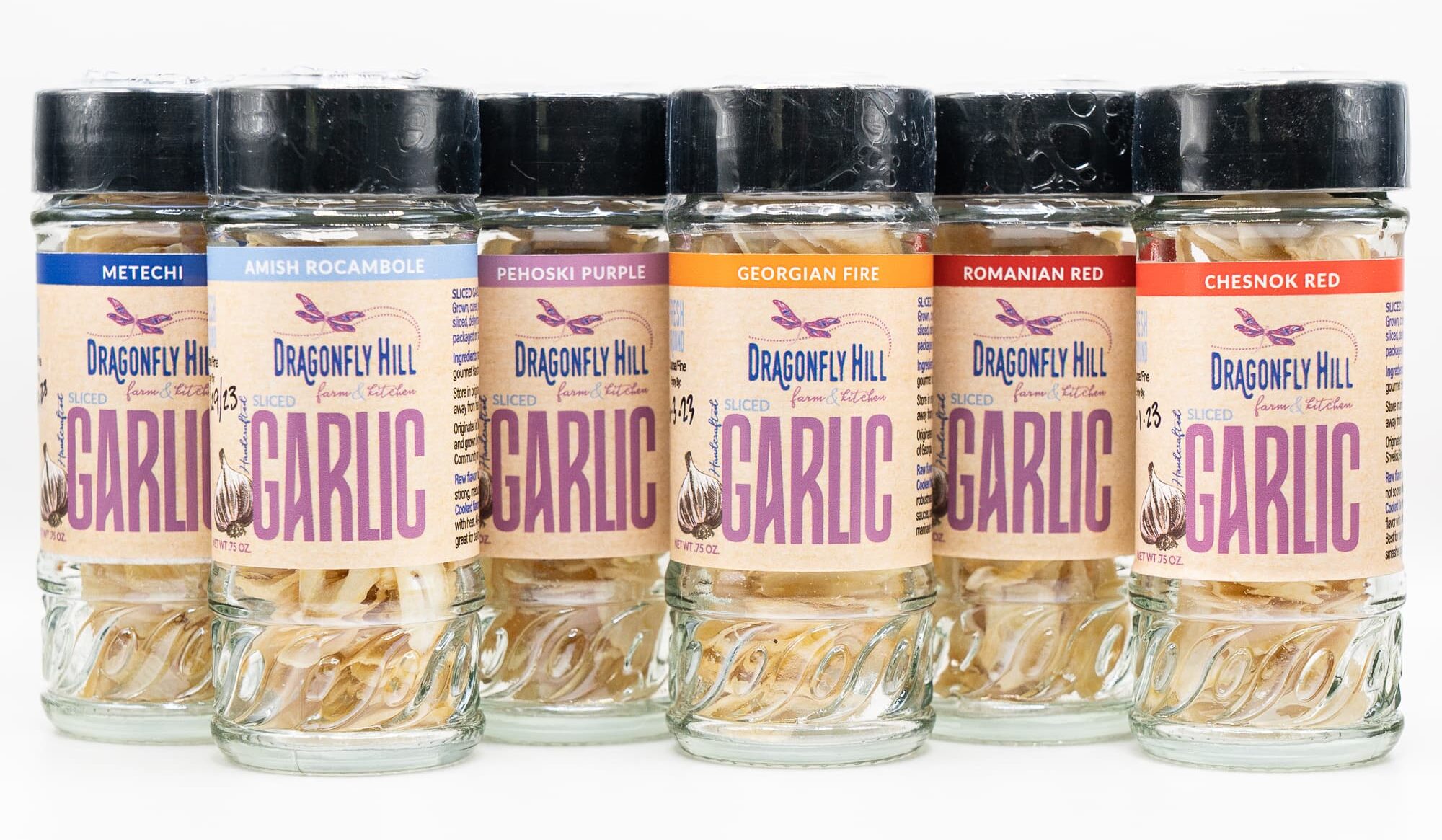
See it in action: Dragonfly Hill Farm & Kitchen
Shopify
Shopify is a popular e-commerce platform for brands of all kinds. It has some of the most advanced online retail tools because it’s used by large companies all over the world. Shopify can support a very large product catalog, so it’s a good option if you’re selling 50+ different items and plan to ship nationwide.
Other advantages: Shopify now has tools for local pickup and delivery options. It integrates well with Quickbooks. You can use custom apps for additional features, like logistics apps that make routing less time consuming.
Cost: $29-$2,300/month plus 2.9% + $0.30 per transaction made
Choose Shopify if:
- You have a large product catalog
- You plan to ship product nationwide
- You want lots of retail features
Skip it if:
- You need the ability to manage local deliveries
- You don’t need all that e-commerce functionality and would rather have something simple
See it in action: Stillman Meats, Katydid Hill
Squarespace
Squarespace is known for its beautifully designed templates that make it simple to get a professional, polished look. Squarespace also has advanced marketing tools baked in, like the ability to manage email and digital ad campaigns, pop-ups, SEO, and more. It’s affordable and easy to set-up e-commerce. It’s an excellent choice for specialty food brands with product catalogs under 50 items.
It’s easiest to make a Squarespace site work if you already have professional photography. We think this platform has few drawbacks (and no, we are not being paid to say that).
Cost: $16-$99/month
Choose it if:
- You want advanced design tools combined with integrated marketing tools
- You want a simple and affordable ecommerce option that doesn’t look amateur
Skip it if:
- You need the most advanced tracking and analysis of online sales (while Squarespace is a robust e-commerce platform that rivals Shopify, it lacks some of Shopify’s sophistication with data)
See it in action: Middle Ground Farm
Don’t need e-commerce? Check out our recommendations for regular website platforms.
Grazecart Drawbacks to Consider
Setup takes some effort
To really build out a beautiful site, you need to have all the ingredients before you start cooking. This means having a solid brand foundation, good copywriting, a clean product list and prices, strong web and product photography, and finalized pickup and delivery logistics. Missing elements lead to an unprofessional presentation and administrative mix-ups.
Limited design functionality
The no-code editor is great, but it does lead to limitations in design. If you know basic HTML/CSS or are working with a web developer, you can implement custom designs.
No bulk add for locations or products
If you have a lot of products and locations, you’ll likely find it tedious to upload them all. Grazecart doesn't allow bulk adding or importing from a CSV. You have to build out each product and location one at a time.
Not ideal for CSAs
Grazecart offers “Subscribe & Save,” very similar to Amazon’s model. Every order can be a one-time order or customers can subscribe and get a percentage discount. This feature is great for driving repeat revenue, but it doesn’t match well with CSAs, where inventory changes week after week.
Limited route customization beyond zip code
You can set up delivery/shipping zones by state or zip code only. There is no ability to set up a radius for delivery zones.
Need a hand getting started with Grazecart? We can help.